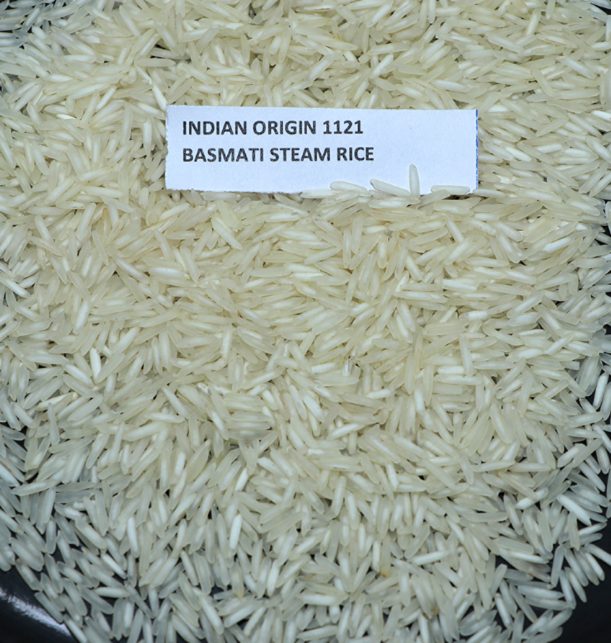
What "Steam" (parboiled) means
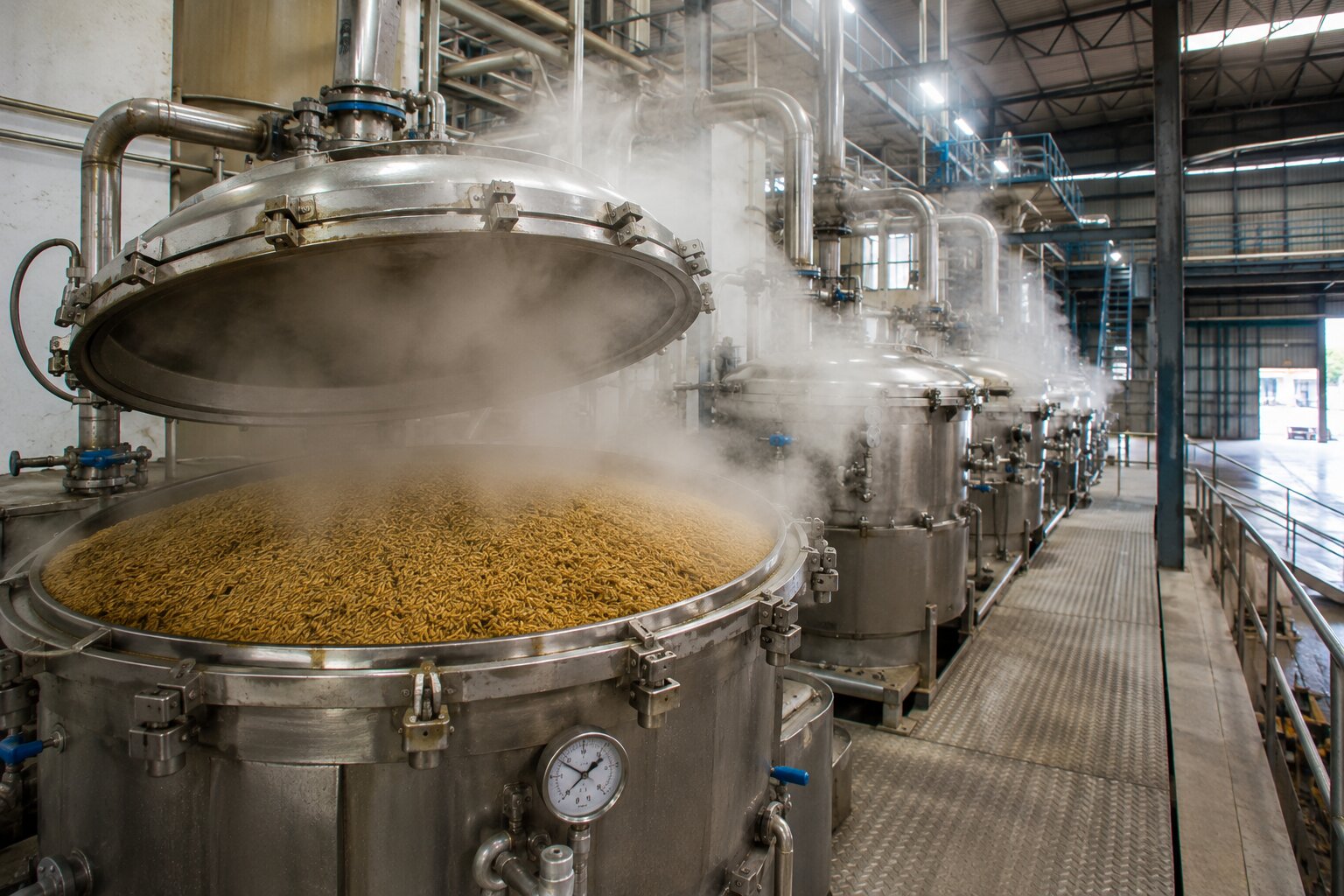
Parboiling is a pre-milling step: paddy is soaked in water, then steamed under pressure, then dried before it goes through de-husking and milling. That soak-steam-dry cycle drives some of the nutrients from the outer bran layer into the grain itself and, more importantly for export buyers, firms up the starch structure of the grain before it's ever milled. That's the physical reason parboiled rice behaves so differently from Raw once it's cooking.
How it's made
After parboiling and drying, the paddy is milled the same way as Raw — de-husked, whitened, polished, then graded and colour-sorted — but the grain that comes out the other end is noticeably tougher. The firmed-up starch structure means Steam basmati resists breakage far better than Raw during milling, handling and a long sea voyage, which is one of the main reasons it's the more forgiving, lower-risk processing type to ship in volume.
Appearance, aroma and cooking behaviour
Steam basmati has a slightly less bright-white appearance than Raw and a marginally milder aroma, but the real difference shows up in the pot: it holds its shape far better under repeated reheating, resists turning mushy or sticky, and tolerates a wider margin of cooking-time error. That durability is exactly what batch-cooking kitchens need. Steaming intensity itself varies too — see our light steam vs. dark steam comparison if a buyer asks about grain colour.
Who buys Steam basmati
Foodservice and catering operations are the core buyers — anywhere rice is cooked ahead of time, held, and served across a shift rather than cooked to order. Restaurants, catering kitchens and institutional food programmes specify Steam (or White Sella, a step further in the same direction) precisely because it survives that hold-and-reheat cycle without falling apart.
Handling and shelf life
The firmer starch structure that makes Steam basmati kitchen-friendly also makes it the sturdier choice logistically — lower breakage in transit than Raw, and a longer effective shelf life in storage. If your buyers are further down a long distribution chain (import, wholesale, then retail or foodservice), that added resilience is worth factoring into the processing choice even before cooking behaviour comes into it.
Available varieties
Steam is available across our full basmati range — see all varieties for specifications, or go straight to 1509 Basmati, our most price-competitive Steam-processed option.