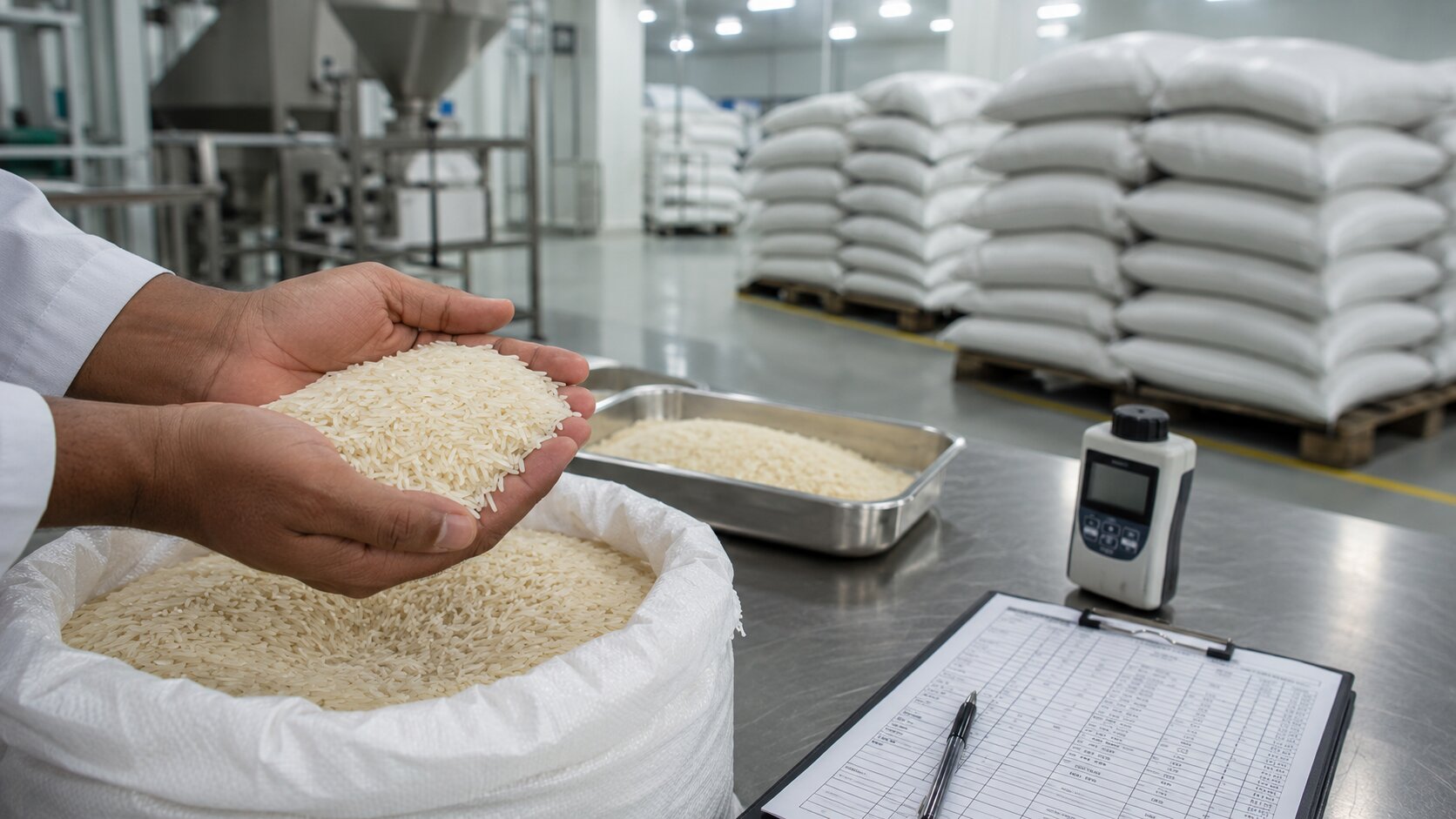
“Aged basmati” shows up on price lists at a real premium over fresh-crop rice of the same variety, and it’s a fair question whether that’s a genuine quality difference or just a label. The grain itself answers that question — aging changes it in ways you can measure, not just describe.
What actually happens to the grain
Over 12 to 24 months of controlled storage, basmati’s moisture content drops from around 14-16% down to roughly 10-11%, and the grain hardens as it dries. The starch inside reorganizes through a process called retrogradation, which is also why aged rice cooks up less sticky and separates more cleanly than fresh-crop grain. The most visible effect is elongation: properly aged basmati can nearly double its length on cooking, well beyond what the same variety does fresh off the mill.
Why the aroma changes too
Basmati’s signature smell comes from a compound called 2-acetyl-1-pyrroline, and aging doesn’t just preserve it, it changes its character. Fresh basmati tends to smell grassy and sharp; aged basmati mellows into a rounder, nuttier profile. That shift is part of what buyers are actually paying for, not just the cooking behavior.
Where the price premium comes from
Aged basmati can sell for several times the price millers pay farmers at harvest, and most of that gap is real cost, not margin: warehousing, the capital tied up in rice that isn’t selling for a year or two, insurance, ongoing pest control, and repeated quality testing over the storage period. A supplier quoting aged basmati at a barely-higher price than fresh crop is either absorbing a loss or not actually aging it as long as claimed.
How to tell it’s genuinely aged
A few checks travel well even without lab equipment. Color should show a faint creamy or golden tint rather than bright, fresh-milled white. Grains should snap cleanly when bent, not crumble. The smell should be subtle and rounded rather than an overpowering scent, which is a sign of additives rather than aging. And a supplier confident in their process will usually print the harvest year or aging duration rather than leaving it vague — that’s worth asking for directly if it’s not on the documentation.
What this means for sourcing
If a quote lists “aged basmati” at a price that looks too close to fresh crop, ask what harvest year it’s from and how long it’s actually been stored. It’s a fair question, and a supplier with a real aging program will have a straightforward answer.
See how our processing methods (Sella vs Raw vs Golden Sella) interact with aging, or check current aged-stock availability on our pricing page.