Basmati gets most of the attention in Indian rice export because it commands the higher price, but a large share of global rice trade — and a large share of what many distributors actually move by volume — is non-basmati. They’re not competing products; they typically serve different buyers within the same distribution business.
What sets basmati apart
Basmati is a protected, geographically-specific long-grain aromatic rice grown in a defined belt across northern India and parts of Pakistan (it carries GI — Geographical Indication — protection). Its defining traits are grain length, aroma, and the way it elongates on cooking without turning sticky. That combination is what supports its price premium over ordinary long-grain rice, and it’s what buyers are specifically paying for when they specify basmati rather than any long-grain alternative.
What non-basmati covers
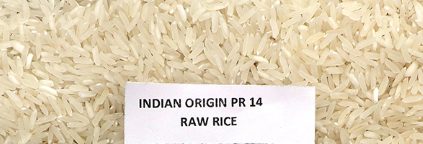
“Non-basmati” is a broad catch-all for everything outside that GI-protected category — in our range, that includes Sugandha, Sharbati, PR 11, PR 14, Parmal and Sona Masoori. These varieties don’t carry basmati’s aroma or elongation profile, but they serve enormous everyday demand: bulk staple-food programmes, foodservice operations where aroma isn’t the selling point, and price-sensitive retail segments where basmati’s premium doesn’t make sense for the customer being served.
Price and positioning
Basmati commands a meaningfully higher FOB price than non-basmati varieties, largely because of the aging, milling and GI-related supply constraints that don’t apply to ordinary rice. Buyers serving a South Asian grocery or premium foodservice segment typically need basmati specifically — substituting a non-basmati long-grain wouldn’t satisfy that customer. Buyers serving general staple-food demand, institutional catering, or price-sensitive retail are often better served by non-basmati, where the cost savings matter more than aroma.
Can one buyer need both?
Frequently, yes. A distributor serving South Asian retail commonly carries both — basmati for the premium shelf position, non-basmati for everyday rice sold alongside it — since the two rarely cannibalize each other’s demand. If you’re building out a rice category rather than a single SKU, it’s worth pricing both rather than assuming basmati alone covers your customer base.
Choosing for your programme
If your end customer expects a specifically aromatic, long-grain basmati experience — biryani, pulao, or any dish where the rice itself is the centrepiece — basmati is the right call regardless of price sensitivity, since substituting won’t satisfy that expectation. If rice is a supporting, high-volume staple in your programme, non-basmati usually delivers better economics without a meaningful loss in customer satisfaction.
See our Non-Basmati Rice product page for the full range, or browse all varieties to compare basmati options side by side.