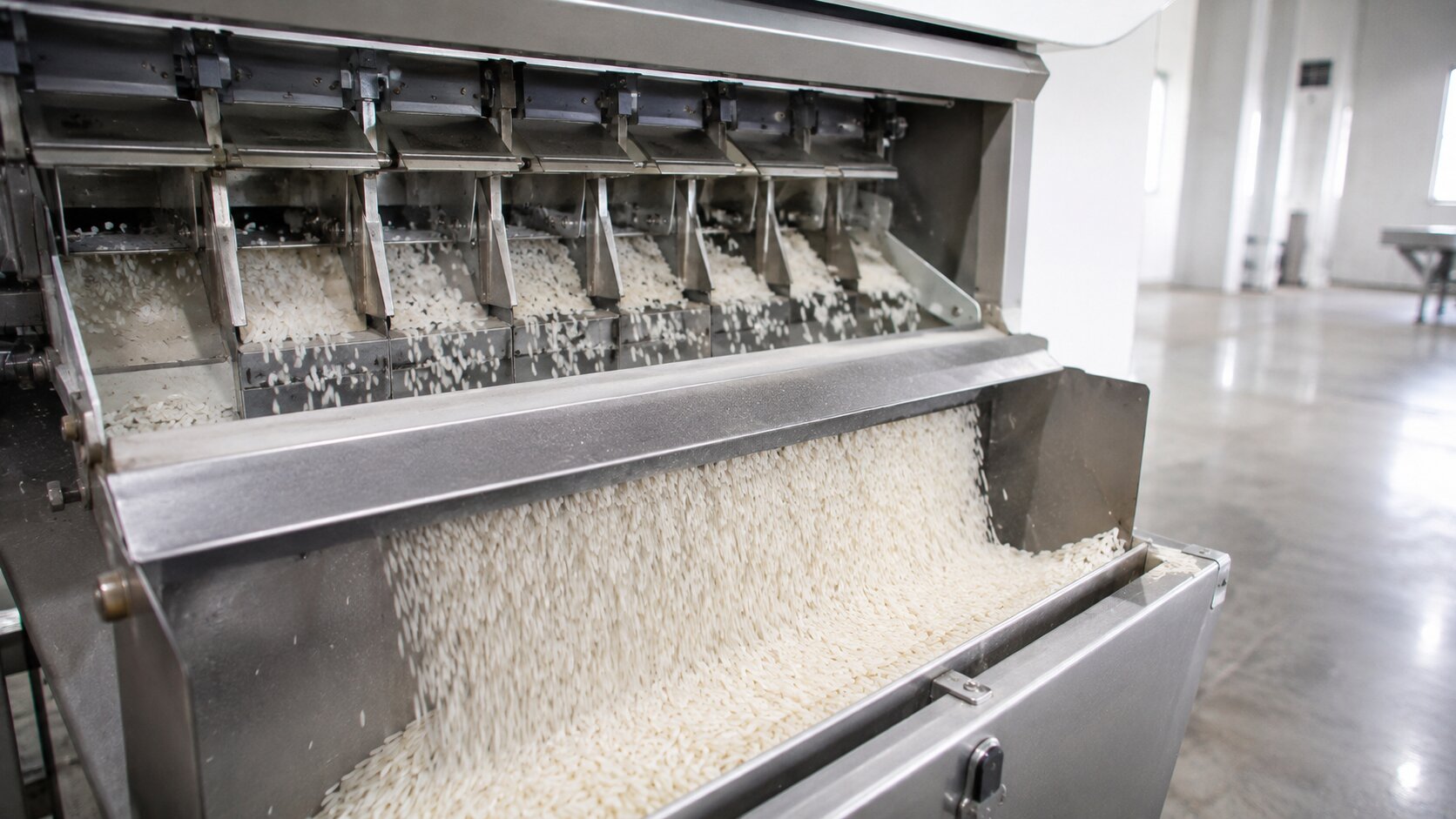
A basmati quote usually comes with a handful of numbers attached — broken percentage, grain length, moisture content — and it’s easy to nod along without knowing what any of them actually protect you from. Here’s what each one means and why it’s on the spec sheet in the first place.
Broken grain percentage
This is the share of grains that snapped during milling and handling rather than staying whole. Export-grade basmati is typically specified at no more than 5% broken, though buyers sourcing for a specific use case sometimes ask for a tighter or looser spec. A higher broken percentage isn’t unsafe, it just means more of the bag turns to smaller pieces in cooking, which matters if your customers are buying on grain appearance.
Grain length and the cooking ratio
Export-grade basmati typically runs 7.5 to 8.6mm in raw grain length, and part of what makes basmati basmati is how much it elongates on cooking, with a lengthwise-to-widthwise expansion ratio of at least 3:5. A supplier quoting grain length is really telling you two things: how long the grain looks in the bag, and roughly how it should behave once your customer’s customer actually cooks it.
Moisture content
Basmati is typically capped around 16% moisture by weight at the point of sale. This isn’t a quality preference so much as a shelf-life and safekeeping number — rice above that threshold is more prone to mold and spoilage risk in storage and transit, which is exactly the kind of problem that shows up after the container’s already at sea.
The defect categories
Spec sheets usually break defects into a few buckets: damaged or discolored grains, chalky grains (the milky-white, brittle ones that didn’t fill out properly), immature green kernels, and under-milled grains still carrying a heavy red bran coating. None of these make the rice unsafe, they’re a quality-consistency measure, and a supplier who can name their defect percentage rather than waving a hand at “premium quality” is one who’s actually graded the lot.
Food-safety limits, briefly
Alongside the visual grading, export basmati is also tested against standard food-safety thresholds for things like heavy metals and aflatoxins. These are baseline safety checks rather than a mark of premium quality — every compliant shipment should clear them, so ask for the lab report rather than treating a pass as a selling point.
What this means when you’re comparing quotes
Two suppliers quoting “1121 basmati” at different prices are often quoting different grades within the same variety name. Broken percentage, grain length, and moisture are the fastest way to tell whether a lower price is a better deal or just a lower spec — ask for the actual numbers, not just the variety code.
Curious how our specific varieties compare on grain length and use case? See our 1121 vs 1509 vs 1718 comparison guide, or check current specs on our pricing page.