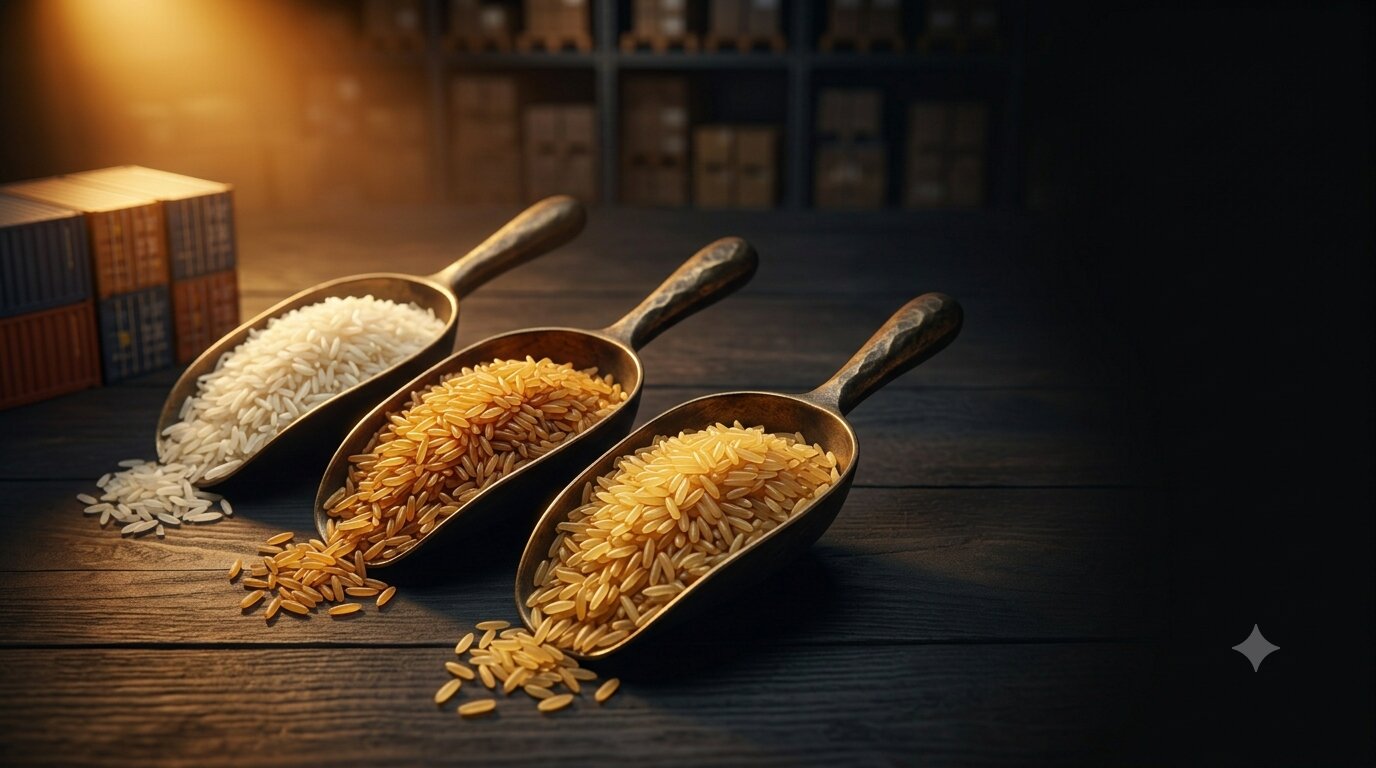
If you’re new to sourcing basmati rice, the variety numbers can feel arbitrary — 1121, 1509, 1718, 1401 — until you realise each one occupies a distinct position in the market, and picking the wrong one for your price tier is one of the more common early mistakes importers make.
1121: the premium benchmark
1121 is the variety most of the industry prices against when it says “premium basmati.” It’s known for an unusually long grain that elongates further on cooking, staying separate rather than clumping, with a strong, traditional basmati aroma. If your positioning is premium retail, high-end foodservice, or a market where buyers expect the longest grain on the plate, 1121 is the safe default — and it commands a price to match.
1509: the value-tier fast mover
1509 is a newer, earlier-maturing hybrid, and it has grown faster than almost any other basmati variety in export volume over the past several years — mainly because it delivers a genuinely aromatic, recognisably basmati rice at a meaningfully lower price than 1121. The grain is a touch shorter and the aroma slightly milder, but for value-tier retail, budget foodservice, or importers building their first basmati line without wanting to commit to premium pricing, 1509 is usually the better starting point.
1718: 1121, refined for consistency
1718 is bred from 1121 lines specifically to reduce breakage and chalkiness during milling. If you already buy 1121-grade rice and find yourself troubleshooting inconsistent broken-grain percentages across shipments, it’s worth asking your supplier to quote 1718 alongside it — same grain length and aroma positioning, generally more consistent milling output.
How to actually decide
The honest answer is that the right variety depends on where you’re selling and who’s buying, not on which one is “best.” A few questions worth asking yourself before you request a quote:
- What’s the shelf price your customer expects? If you’re competing on price, 1509 protects your margin better than 1121.
- Is grain length itself part of your marketing? Premium retail programmes that photograph the rice or promote “extra-long grain” on pack should stay with 1121 or 1718.
- How sensitive is your operation to broken-grain percentage? High-volume foodservice kitchens often care more about consistency than marketing claims — 1718 is worth a side-by-side sample.
If none of that narrows it down, ask your supplier for samples of two varieties side by side rather than guessing from a spec sheet. A cooked-rice comparison settles most of these decisions in five minutes. For what the broken-percentage and grain-length numbers on a spec sheet actually mean, see our grading standards guide.
Ready to compare varieties for your own programme? Request a quote and tell us your target price point — we’ll recommend the variety that actually fits, not just the one with the highest margin for us.