Most guides to importing rice into Canada stop at “get your CFIA licence.” That’s necessary, but it doesn’t tell you what a container actually costs to land — and that number is what decides whether a first order makes sense. Here’s what we found when we priced it out properly, with real quotes rather than rounded guesses.
The two costs that turn out to be zero
Milled rice from India (HS 1006.30) enters Canada duty-free, and GST is zero-rated on basic groceries — rice included. Confirmed directly against CFIA’s Automated Import Reference System, not assumed. If a broker or a supplier tells you otherwise, ask them to show you the AIRS entry.
What a broker actually charges
A licensed Canadian customs broker quoted us CAD 310 plus tax, all-in, for a formal commercial entry on a 20ft container — covering CFIA/OGD release and up to five HS classification lines. On top of that, CARM registration and financial security setup runs a one-time CAD 50 plus tax. Under CAD 400 total to clear a container through customs, once you’re set up.
The part that surprises people: you don’t need a warehouse
This was the assumption that held our own plans back for months. It isn’t true. CBSA doesn’t require an importer to hold their own storage — a container can be cleared and delivered directly to a customer’s facility or a third-party logistics (3PL) provider. What you need is an importer of record and a delivery address, not a lease.
Where the container actually lands
Toronto has no seaport. Cargo from India typically clears at Montreal (occasionally Halifax), then moves inland by rail — Montreal-bound boxes travel by CN or CPKC to a GTA rail ramp, usually CN’s Brampton terminal or CP’s Vaughan intermodal yard. From there it’s a short drayage move to a warehouse, not a cross-country haul.
Rough market-range costs at this stage: destination terminal handling, CAD 300–600, and drayage from the rail ramp to a GTA warehouse, CAD 250–500. These vary by carrier and season — get them confirmed in writing before you commit to a shipment.
The cost that actually dominates: ocean freight
Everything above is a few hundred dollars. Ocean freight is not. A real quote we received for Mundra to Toronto, through bill of lading (carrier handles the full move including the rail leg), came in at USD 8,350 for a 20ft container — more than the rice itself, depending on the variety.
That has a real implication for what you buy: freight costs the same whether the container holds budget rice or premium rice, so it eats a much bigger share of a cheaper variety’s value. A container of $900/MT rice absorbs proportionally more freight cost than one at $1,150/MT. If you’re comparing suppliers on price per tonne alone, run the landed number, not the FOB number — the cheaper quote isn’t always the cheaper container.
One packaging detail that catches first-time importers
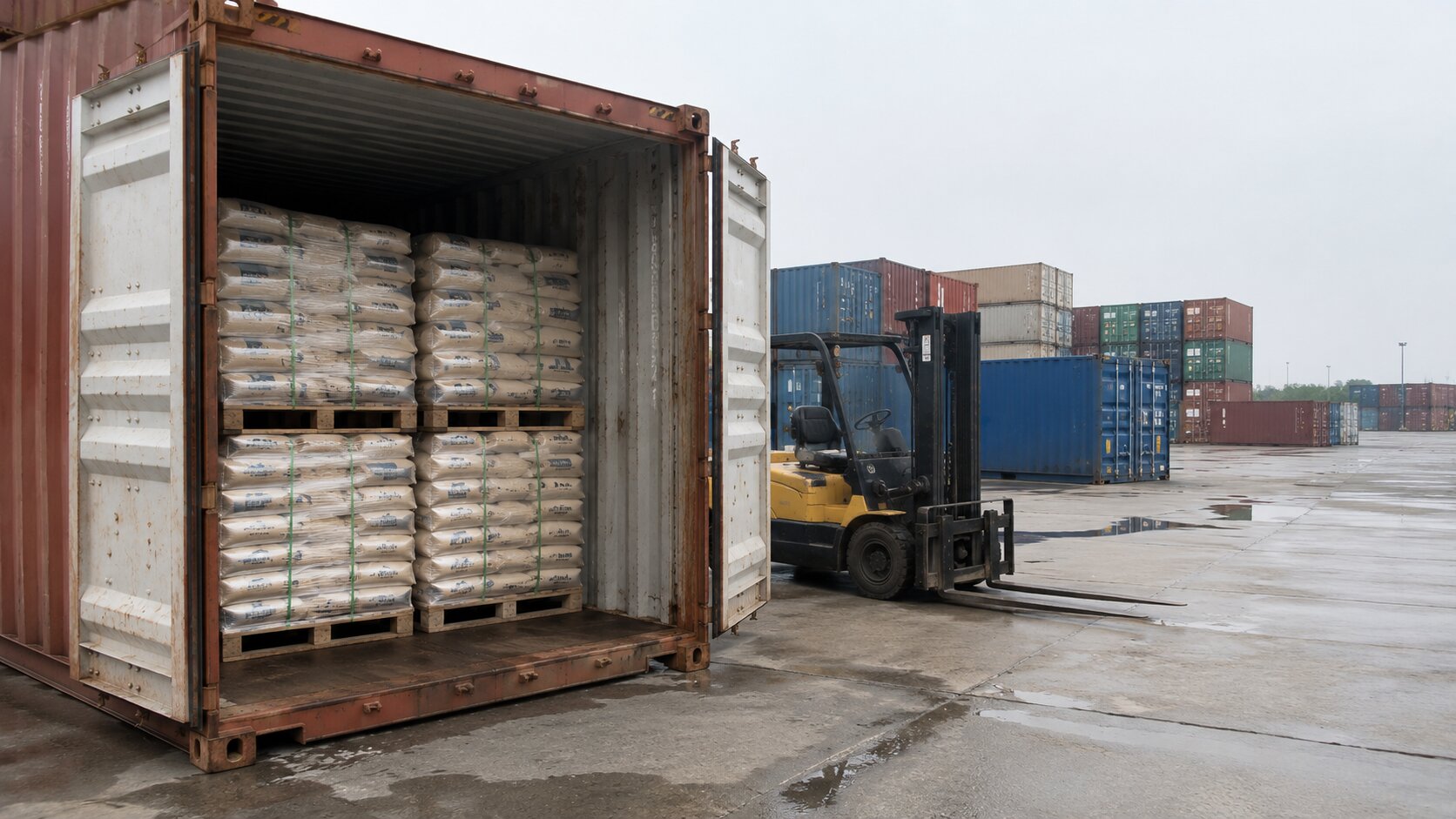
If your container uses wood pallets or bracing, ISPM 15 certification is mandatory — every piece of wood must carry the compliant stamp, and the importer or broker has to attest to it on the customs declaration. Floor-loading rice in bags avoids this entirely, which is one reason many exporters ship loose rather than palletized for a first container.
Putting it together
For a 20ft container, once you add brokerage, CARM, terminal handling, drayage and freight to the rice itself, you’re looking at a landed cost that’s dominated by ocean freight and the goods — the Canadian-side handling and compliance costs are genuinely small in comparison. That’s worth knowing before you assume importing is more complicated, or more expensive on the domestic side, than it actually is.
We hold an active CFIA Safe Food for Canadians licence and can walk through a real landed-cost estimate for your specific port and volume. See our Canada export overview, or request a quote with your target destination.