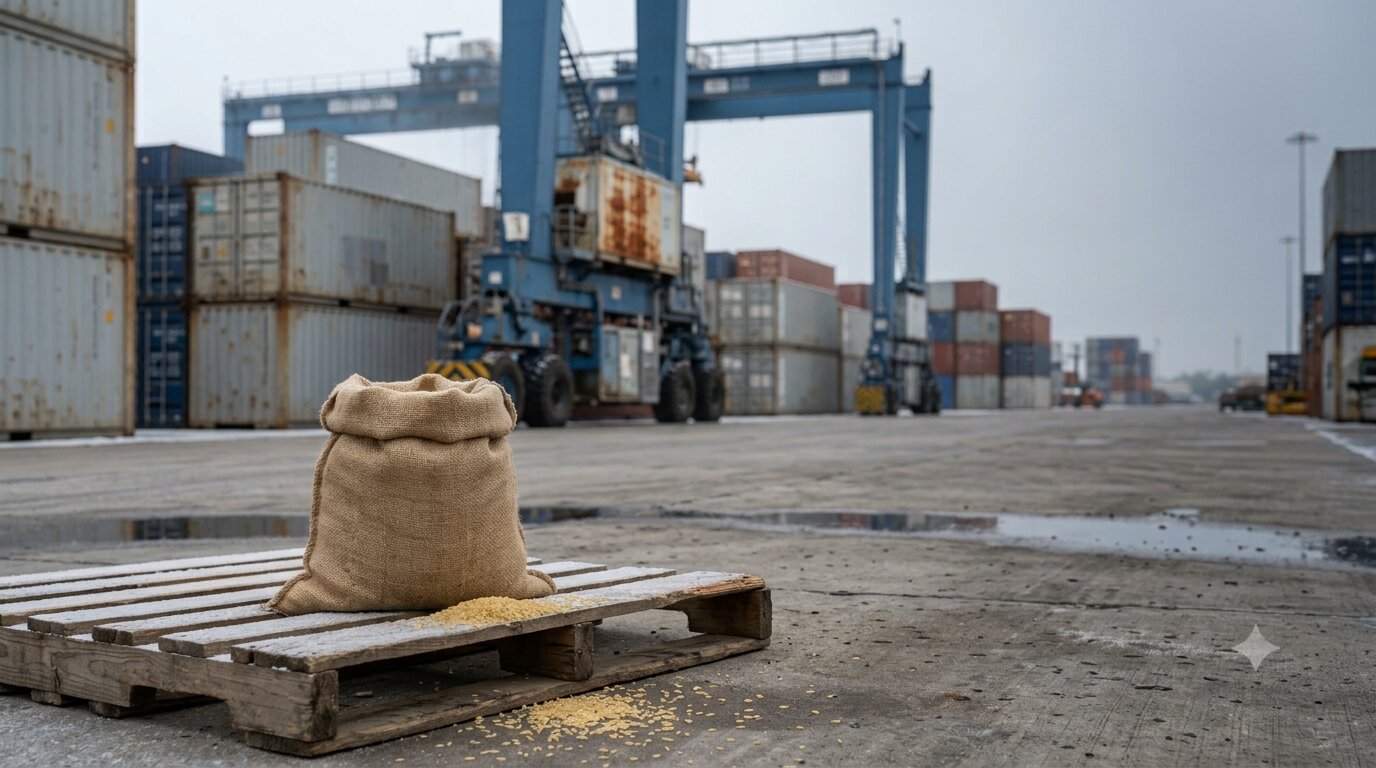
The UAE is both a large consumption market and a re-export hub for basmati across the wider Gulf, which is part of why so much India-origin rice moves through Jebel Ali and Khor Fakkan every year. If you’re importing for the first time, here’s what actually needs to be lined up before a container leaves Mundra or Nhava Sheva.
MOIAT conformity and the Certificate of Conformity
Rice sold in the UAE has to meet technical regulations set by the Ministry of Industry and Advanced Technology (MOIAT), and that compliance is checked through a Certificate of Conformity issued against the shipment. This sits alongside, not instead of, the standard trade documents — invoice, packing list, and certificate of origin — so budget time for it rather than treating it as a same-day formality.
Halal certification
Halal certification is expected for food imports and covers more than the grain itself: it extends to how the rice is handled, stored and transported along the supply chain. Ask your supplier for their certificate up front rather than assuming any exporter’s basmati automatically qualifies.
Phytosanitary and lab documentation
A phytosanitary certificate confirming the shipment is free of pests and plant disease travels with the cargo, and UAE authorities can request lab test reports showing pesticide residue levels are within limits. Keeping both on hand, rather than sourcing them after a query, is what keeps a shipment moving through inspection instead of sitting in it.
Arabic labelling
Packaging needs to carry Arabic text alongside English, covering product name, country of origin, net weight in metric units, production and expiry dates, storage instructions, and batch or lot numbers. If the rice is retail-bound, this needs to be designed into the packaging from the start, the same way bilingual labelling gets planned early for Canada-bound retail shipments.
FIRS registration and customs
Rice is classified under HS code 1006, and a standard 5% customs duty applies unless a trade agreement reduces it. Shipments need to be pre-registered in the UAE’s Food Import and Re-export System (FIRS) before arrival — this is the step that’s easiest to leave too late, since it needs to happen ahead of the container reaching port, not after.
What happens at the port
At Jebel Ali and the other major ports, clearance runs on a risk-based system: lower-risk shipments move through digital clearance quickly, while flagged shipments go to lab testing. A complete, consistent document set on the first pass is what keeps a shipment in the fast lane rather than the slow one.
A practical first-order checklist
- Confirm your food import licence and FIRS pre-registration are in place before the ship date.
- Request the Certificate of Conformity, halal certificate, and phytosanitary certificate from your supplier as part of the shipping documents, not as an afterthought.
- Confirm lab test reports for pesticide residue are available if requested at port.
- Plan Arabic/English bilingual labelling into your packaging design if the shipment is retail-bound.
- Agree Incoterms (FOB, CFR or CIF) and payment terms with your supplier.
- Arrange a customs broker familiar with FIRS if you don’t already have one.
Requirements shift from time to time, so confirm current specifics with your customs broker before finalizing a landed-cost calculation. See our guide on FOB vs CFR vs CIF pricing for how Incoterms affect what you’re responsible for after the container leaves India, or request a quote and tell us your target port.