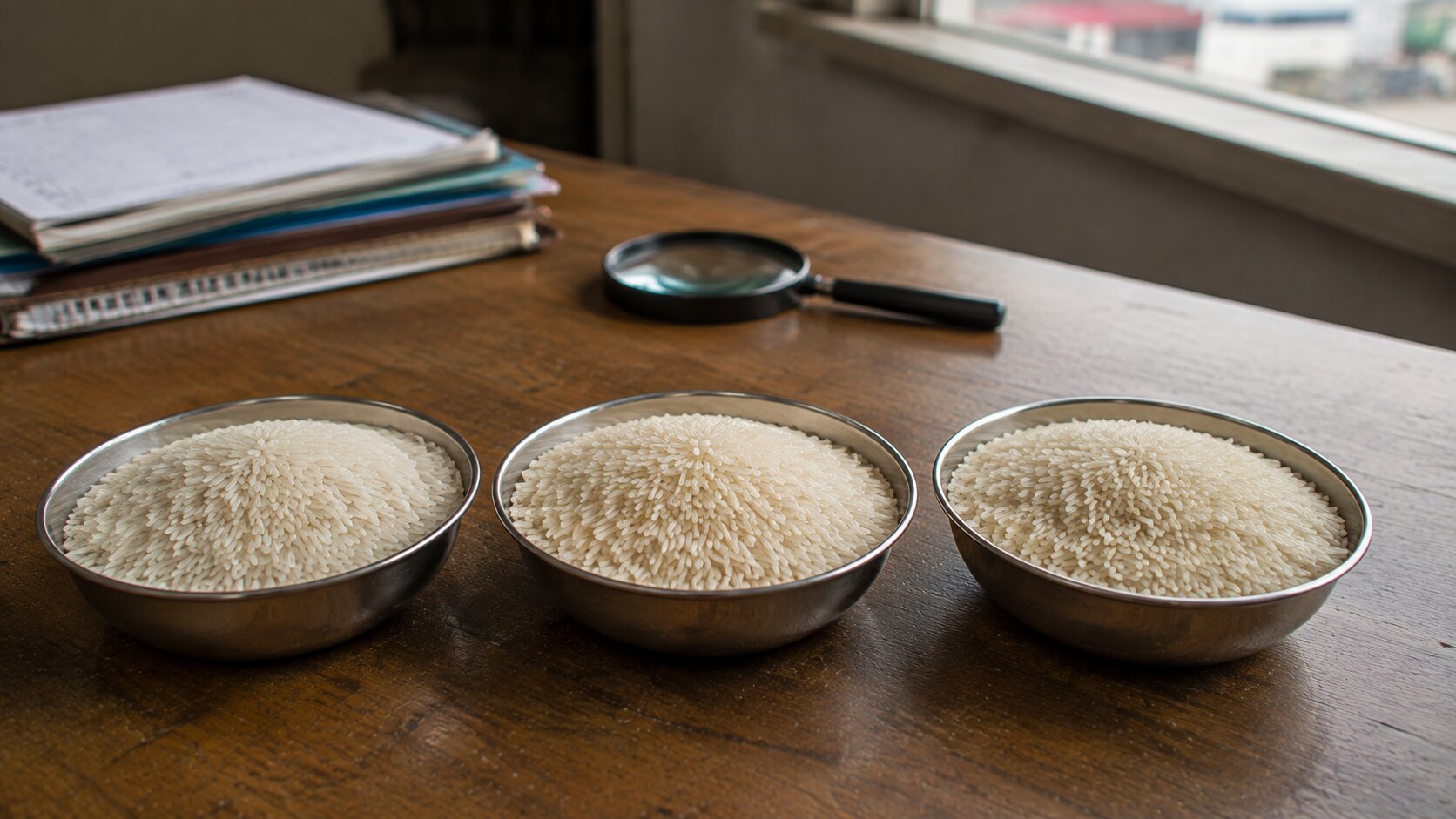
“Pesticide-residue-free” gets used loosely in rice marketing, and it’s worth being precise about what it actually means, because it isn’t a quality tier the way processing type is — it’s a compliance requirement, and which one applies to your shipment depends entirely on your destination market’s regulations.
What “conventional” basmati means
Conventional basmati is grown and processed under India’s own domestic pesticide-use standards, which permit a range of crop-protection chemicals within limits set by Indian regulation. That’s perfectly legal rice, and it’s what moves through most domestic Indian consumption and a large share of export volume to markets that don’t impose stricter residue limits than India’s own.
What “pesticide-residue-free” actually requires
Markets like the EU, UK and, in a more limited way, the US set their own Maximum Residue Limits (MRLs) for specific pesticides — often stricter, and covering a different list of chemicals, than India’s domestic standards. Rice destined for these markets needs to test below those specific limits, which usually means sourcing from paddy grown under a more restricted spray programme and verifying it with laboratory residue testing before the shipment leaves India. “Residue-free” is a bit of a misnomer in the strictest sense — it means tested and compliant with a specific market’s MRLs, not literally zero detectable residue of anything.
Why this isn’t a one-time certification
Because MRLs vary by destination and can be updated by regulators, residue compliance is usually arranged per shipment rather than earned once and applied forever. A responsible exporter tests each relevant batch against the MRL list that actually applies to where it’s going, rather than reusing a test result from a different market or a different season’s crop.
What this means for your purchase
If you’re importing into the EU or UK, ask specifically about residue testing against those markets’ MRLs, not just general Indian export certification — the two are not the same thing, and a supplier who conflates them either doesn’t understand the distinction or isn’t being precise about what they can actually guarantee. If you’re importing into a market without unusually strict MRLs, conventional basmati that meets India’s own export standards is normal and doesn’t need the extra testing overhead.
Where we stand
We arrange pesticide residue testing per shipment where a buyer’s market requires it, working with our partner mills and inspection agencies rather than claiming a blanket certification that would need re-verifying anyway. See our Certifications & Compliance page for the registrations we hold, and tell us your destination market at enquiry stage so residue testing — if needed — is built into the shipment timeline rather than a scramble at the last minute.